A Small Note on Incendiary in Splinterlands


Hello, Splinterlands warriors.
Welcome back to battle of the day, an unofficial column where I reflect on why a card can look amazing—only to quietly stab its own owner in the back.
Today we’re having a relaxed chat about a strategy that looks strong, sounds cool, but if set up incorrectly can turn into a small disaster: the combination of Incendiary monsters with a healer. And trust me, this isn’t just theory. This is personal experience—one that almost ended badly… if only the fire hadn’t forgotten who its master was.
A Bit About Incendiary: Fire That Shows No Mercy
First, let’s get on the same page.

Incendiary is a Debilitation that starts working at the beginning of round two. It applies the Burning effect, and at the start of each round this effect has a 33% chance to spread to adjacent units. After that, all burning units lose 2 health. This effect can be removed with Cleanse, and its impact can be mitigated if there’s a Healer.
In simple but annoying terms:
starting from round two, there is fire.
That fire can spread.
And every round, 2 HP disappears—no negotiation.
This is where Splinterlands starts to feel like real life:
Incendiary monsters are strong, above average—but they come with an intentional weakness.
Using them always involves conflict:
you take big potential rewards, but you accept real risk.
That’s why, in theory, Incendiary monsters should always be paired with a healer or a cleanser.
Without them, fire isn’t a weapon—it’s a deferred death plan.
Battle Setup: Similar on the Surface, Different in Fate
Interestingly, at first glance, my team setup and my opponent’s were almost identical. Same Fire element, similar archon, aggressive playstyle, and it looked like the duel would be decided by raw damage. There was only one difference: my opponent ran an Incendiary monster, while I did not.

On paper, if Incendiary had no side effects, I should have lost. My opponent’s damage was more consistent, their pressure cleaner. But Splinterlands, like life, rarely follows the script.
And that’s where the drama began.
No healer.
No cleanse.
The fire was lit… but no one was there to put it out.
Early Rounds: The Fire Starts Working, Slowly but Surely
From the early rounds, the Incendiary effect began to make itself felt.
Kha'zi Conjurer and Chaos Battle Mage on my opponent’s side started taking 2 damage every round from Burning.
There was no big explosion.
No instant drama.
Just HP numbers quietly ticking down—like a bank balance slowly shrinking because you forgot to cancel an auto-debit.
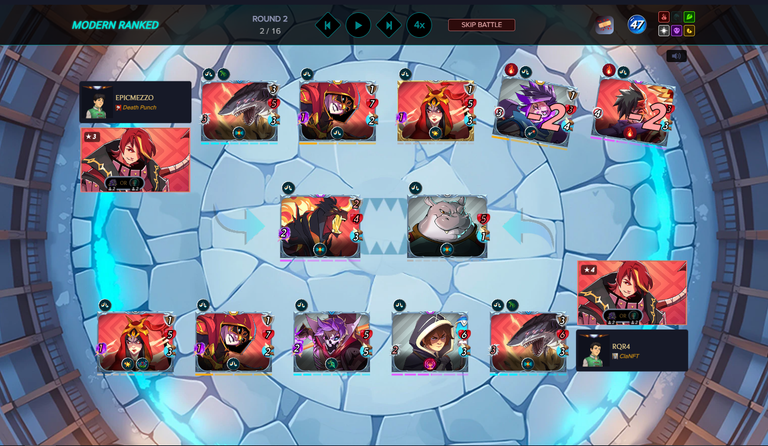
Round two still looked safe.
Round three started to feel dangerous.

By round three, both monsters were already in critical condition, and the saddest part was this: there was absolutely no one who could help them.
At that moment, I realized one thing:
I didn’t need to rush to win.
I just needed to last longer.
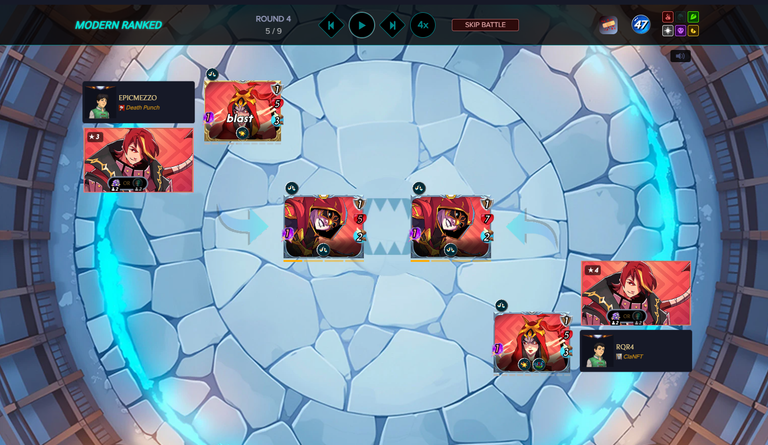
Round four became the most interesting moment. The board was down to 2 versus 2. Logically, I should have been overwhelmed and knocked out. And if there had been no Burning effect from Incendiary, that probably would have happened.
But instead, by the end of the round, it was Incendiary’s own drawback that finished the fight. My opponent’s monsters fell to the very effect they brought themselves. I won not because I was clever, but because my opponent failed to calculate the risk.
Noteworthy Takeaways
There are several important lessons from this battle:
Incendiary monsters have two faces
One face is above-average power. The other is unavoidable self-inflicted damage.Incendiary without a healer or cleanse is a strategic mistake
Especially under rulesets like Healed Out. That’s not bold—that’s reckless.Sometimes, the best strategy is endurance
Not every battle needs to be won with massive damage. Sometimes, all you need is to give your opponent time to lose to their own mistakes.
Closing: A Short Piece of Advice
If I had to sum this up in one simple sentence:
Only use Incendiary monsters if you have a way to heal or cleanse them.
Because fire is powerful—but without control,
it doesn’t burn your enemy—it burns your own plan.
And in Splinterlands, just like in life, the one who survives isn’t always the most vicious, but the one who understands the risks of their own choices.

Talk about Splinterlands,
If you haven't tried out this fantastic game called Splinterlands yet, I invite you to Join.
It's free, but you'll need to invest in a beginning deck or buy gaming cards to gain real assets like cards and tokens.
If you already joined the splinterlands, and are looking for a place to grow. We need YOU. We are a chill, social guild looking for a few more active members! If you think you might be a fit, join us in our Discord
You have been manually curated by...

Delegate Tokens and HP to Fallen Angels to earn weekly rewards!
Delegate | Join to the guild